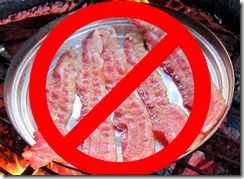
The point of any food blog is to share the authors’ love of food. It should be focused just on that – The food. The reader assumes that the author is very familiar about the food they write about. But, if you say that there is something off-putting about it, then the reader will take that into consideration and will pass on the recipe, the post or the entire blog. Or, the author likes to put on the nutritionist’s or doctor’s cap when they might not have any medical background. It’s like saying, “Here’s my recipe and I’m proud to share it with you. But, here’s the bad thing about it”. The blogger has just said, “this stuff is toxic”.
I don’t understand why a blogger would disparage their food. What’s the point in spending the time and effort to write a recipe and snap some shots of a food that your, the blogger, is saying is “not good”?
It’s important to watch what you say about your food and to keep the food in a good light. Here are some phrases that are a definite turn off and tell the reader “my food can harm you”.
“Eat in Moderation”
I find it irritating when I see “Eat in moderation”. There is one blog where there are a handful of recipes with this phrase. Granted, the dishes aren’t something that you would cook on a daily basis (or, would you?). Nevertheless, I came looking for recipes, NOT advice!
Thanks, but no thanks.
Any adult with some basic knowledge about diet would know what foods to eat more of and what to eat on occasion. Less fat, less salt, less sugar… More fiber, more fruits, more vegetables… etc. Blah, blah, blah! We know! We know! It should be assumed that the reader has enough discretion. Give them that much credit.
“Eat at Your Own Risk”
Nowhere have I ever seen this phrase in a recipe except for one blog post…
“Pampabata [something to make you younger] is a word used to describe a food that is not really good for health… This dish is the official ‘pampabata’ recipe from my kitchen. EAT AT YOUR OWN RISK!” [sic] (Mely’s Kitchen, emphasis mine)
REALLY?! SERIOUSLY?!
It might have been added as a bit of a joke or gimmick to grab attention, but it’s the first thing that your eyes go to! It grabbed my attention. It, too, advises to “eat in moderation”… C’mon! But, justifiably so since it just pork fat.
The reason why it is called “pampabata” is because of the collagen in the fat. Collagen is used in many beauty creams for healthier skin. The author had the chance to offer that information but failed to do so. I would have liked to see a little more background on the dish because it must have an interesting history. Sadly, the author posted it as more of a curiosity since it might KILL. I guess beauty does have a price.
“Healthier”
Another thing I’ve noticed is that some authors like to claim that their cooking is “healthier”. Yet, they don’t go into detail as to how they have made the recipe “healthier”. A good scenario is the reader who knows little or nothing about the dish (such as I did when it came to some of the recipes on one blog). The reader’s first impression is that the food isn’t good for you. Great intro!
In some cases, it’s an ingredient that is commonly used that been omitted. For example…
“I do not put flavor enhancers (msg.( vetsin), pork powder, chicken powder, beef powder and all the cube flavor enhancers) to my recipes, either you use it or not it's up to you.” [sic]
It’s fine that she doesn’t add these to her recipes. That’s great! She adds that it’s up to the reader to use such ingredients. What’s lacking is where these ingredients are use or how. How is the reader to decide? If there is an ingredient that can be optional then tag it in the recipe. It possible that the reader would like to try to cook the dish in it’s original form for various reasons. Give them that option.
In one of my blog posts, I explain how
Sinigang is cooked with readily available mix packets which has become the norm. But, in my recipe I try to reach a more “authentic” recipe by using tamarind paste. I wanted to counter the popularity of the MSG- and salt-laden packets. But, I explain that in the post and neither do I claim that it’s in any way “healthier”. I let the reader decide if it seems “healthier”; otherwise, they can continue to use the packets.
I know of two cooks/chefs that have taken recipes and made a point of making them healthier. They are
Graham Kerr, the “Galloping Groumet”, who took many of his own recipes and cut down the fat, salt, sugar, etc. At the end on his show, he shows how he’s reduced the numbers for each. Another is
Bobby Deen, who “remastered” his mother’s,
Paula Deen’s, Southern recipes making them healthier. In each case, they showcase the original recipe and show how they made it healthier at the end of each episode. In other words, they have evidence and facts to back up their claims. But, to claim that your recipe is “healthier” is really just a gimmick unless you can put money where your mouth is.
Celebrate the Food
Many of the readers are most probably aware of what they can and cannot eat for whatever reason – They don’t need to be coddled.
All in all, the thing to take away is to never denigrate the food. In fact, celebrate it! It doesn’t matter what the readers might think or how “horrible” it might be. If they like it, they will like it. If not, it’s their loss. What really matters is what you think. It’s your food! You as the “expert” and you need to educate the reader why you like your food so much.Talking bad about your food erodes away at your creditability; the confidence of your readers in you diminishes. If you put the food in a bad light, the reader will also have a bad opinion of the food. You know more about it than they do. You don’t need to give the reader a reason why they would not like your recipe nor attempt to cook your dish. Why in this world would you give them a chance to dislike your food? So, don’t. Or, stop writing about food immediately!
Why spend the time writing the recipe and sharing it with others if in the end it does no one any good?